Israel Defense Forces
World War ZThe Israel Defense Forces are the military institution through which Israel turns a public-health catastrophe into a system of controlled entry, quarantine, territorial defense, and eventually civil war. In the testimony of a Palestinian family seeking refuge, the force appears as both an intimidating bureaucracy and a disciplined shield: it screens bodies at the border, confines arrivals at the Yeroham resettlement camp, fights armed Jewish rebels, and confronts the undead with methods precise enough to expose the limits of ordinary military doctrine.
Border Security and Quarantine
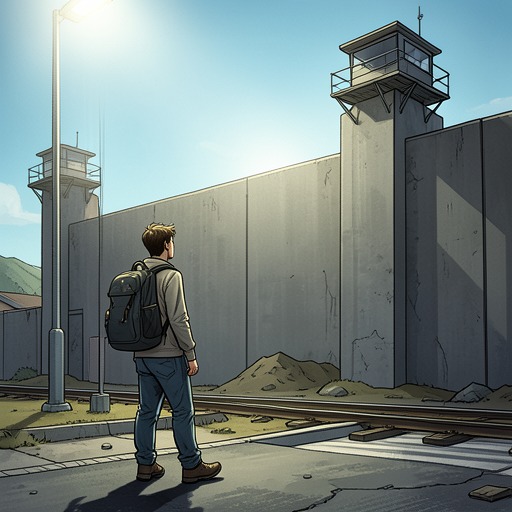
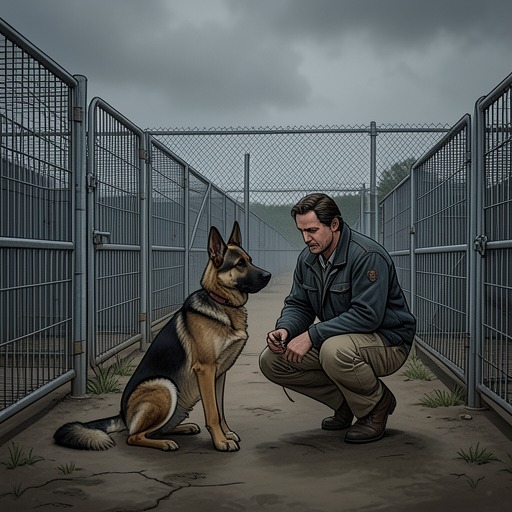
At the Taba crossing, the Israel Defense Forces operate within a wider security system built around an unfinished wall, single-file movement, armed guards, unmarked vans, and large dogs. Refugees are not admitted simply because their papers are in order. The dogs are used as biological detectors, reacting violently to people who carry signs of infection. Those who trigger the animals are removed by civilians in plain clothes, while the rest are moved onward through the gauntlet. The system is severe enough to resemble selection rather than ordinary immigration control: an injured elderly man is taken away after the dogs react to him, and another man is exposed as infected when his struggle tears open a bloodstained abdominal bandage.
The family’s arrival at the Yeroham resettlement camp reveals the force’s role in a broader quarantine regime. The camp combines tents, guards, barbed wire, overcrowding, and the baking Negev sun with relentless medical examination. Personnel test blood, skin, hair, saliva, urine, and feces every day. The examinations are exhausting and humiliating, but Palestinian doctors and nurses make the process more bearable for Muslim detainees, including a physician from Jabaliya in Gaza who had himself been detained only months earlier. His insistence that the refugees had made the only possible decision gradually challenges their suspicion of Israel’s warnings.
The examination system makes health status more important than documentation. The family’s passports, painstakingly prepared by the father, receive little attention; what matters is a clean bill of health, unless the Israel Defense Forces or police seek someone for earlier illicit activity. After three weeks, the Ministry of Social Affairs provides subsidized housing, free schooling, and employment for the father. The sequence shows the force embedded in a state apparatus that treats quarantine as both protection and admission test: bodies are inspected first, and citizenship-like security follows only after they are cleared.
Combat During the Israeli Civil War
The force’s protective function becomes visible when fighting erupts in the streets. The refugee narrator initially mistakes the gunfire between soldiers and civilians for a Palestinian liberation uprising and feels an impulse to join the supposed battle against Israel. An Israel Defense Forces soldier instead drags the narrator and the family into a Starbucks, pushes them away from the windows, and shields them while the father lies wounded in the shoulder. The narrator’s hatred of the soldiers makes the scene morally unstable, because the uniformed figure is simultaneously an enemy in the narrator’s imagination and the family’s immediate protection against gunfire.
The decisive revelation comes when a rebel enters through the rear door with a grenade. The soldier shoots him; the dying man drops the weapon, and the soldier attempts to throw it back into the street. The grenade explodes in midair, and the soldier’s body absorbs the blast. Only afterward does the narrator see that the corpse is marked by payess, a yarmulke, and tzitzit. The armed rebels are Jews, not Palestinian insurgents. The battle is the opening of the Israeli Civil War, and the Israel Defense Forces are fighting a rebellion from within the state’s own religious community.
The conflict is linked to policies that had already transformed Israeli territory and politics: the repatriation of Palestinians, withdrawal from the West Bank, the Strategic Hamlet Resettlement Program, and the evacuation of Al Quds and the Nablus-to-Hebron corridor. Rebuilding a shorter wall along the 1967 demarcation line was intended to close a major vulnerability, but it also provoked the religious right. The Israel Defense Forces ultimately prevail in part because many rebels come from the Ultra-Orthodox community and have not served in the armed forces. For the narrator, this changes the meaning of the conflict. Long-held assumptions about Jewish society collapse, and the face of the immediate enemy becomes the undead rather than the people previously hated.
Engagement with the Undead Threat
The force’s battlefield methods are shown most starkly during the attack on an unmarked van. As the refugee family runs toward an Israeli tank, a handheld rocket strikes the van’s engine. Burning figures climb from the wreckage, their clothing and skin covered in petrol. Bullets pass through their chests without stopping them until the squad leader orders the soldiers to aim at the head. The soldiers adjust their fire, and the creatures’ heads explode before the bodies fall as charred, headless corpses.
This encounter gives the Israel Defense Forces a practical lesson that the narrator had previously resisted: the Israeli warnings about the undead were true, and the world’s failure to listen was incomprehensible. The force’s effectiveness rests not on indiscriminate firepower but on recognizing the enemy’s physiology and concentrating violence on the brain. That distinction anticipates the wider wartime transformation in which armies abandon assumptions designed for living opponents and develop weapons, ammunition, and training suited to the dead.
The Israel Defense Forces also stand behind the early canine screening system that other countries imitate. Military and police dogs are kept in cages because the animals may attack infected people, one another, or their handlers. Their terror response can become uncontrollable, and many handlers lose hands, arms, or throats, yet the same instinct is precisely what makes the dogs valuable for triage. The method converts animal fear into a population-screening instrument, making the force’s security practice both biologically perceptive and institutionally brutal.
Strategic Retreat and the Wider War Economy
The Israel Defense Forces are part of a global military crisis in which conventional assumptions about war collapse. A later account describes two hundred million zombies confronting the surviving armed forces. Living armies must be recruited, supplied, and commanded; the undead require none of these conditions. The result is a strategic problem for which the inherited book of war is useless, requiring a new doctrine built around endurance, logistics, and the efficient destruction of targets.
That contrast clarifies the force’s earlier use of concentration, quarantine, and fortified borders. Israel’s wall and controlled crossings are not isolated acts of border policy but elements of a larger attempt to preserve a defensible population while identifying infection. The same logic appears in the Redeker Plan, which proposes withdrawing armed forces into a safe zone and evacuating only a fraction of civilians, while leaving others as human bait to hold the undead away from the retreating army. The Israel Defense Forces are therefore associated with the central wartime dilemma: survival may depend on protecting a bounded core while abandoning, isolating, or sacrificing those outside it.
The broader coalition war also reveals why military effectiveness depends on production and transport as much as courage. The surviving powers need factories, raw materials, and logistics, while the living dead control most of the world’s landmass. American reconstruction consequently classifies labor, retrains a workforce in which more than 65 percent are judged to possess no valued vocation, and redirects production toward carpenters, machinists, gunsmiths, and other practical skills. The Continental Airlift sustains scattered Blue Zones through coordinated drops, prioritizing self-sustaining tools and spare parts over recurring deliveries of food and medicine. These developments provide the economic context for the Israel Defense Forces’ own security practices: containment and combat are inseparable from the ability to maintain supplies, personnel, and defensible infrastructure.
Institutional Significance
The Israel Defense Forces embody the contradiction of emergency governance. They protect refugees while imprisoning them, save civilians while fighting fellow citizens, and use medical examinations and dogs to distinguish the healthy from the infected. Their authority is accepted only gradually by those who arrive fearing persecution, and the narrator’s change in understanding depends on witnessing the force protect a family from a grenade and destroy the undead with disciplined headshots.
The organization’s methods also anticipate the postwar emphasis on resource-to-kill efficiency. Later military planners favor systems that can be manufactured, supplied, repaired, and used repeatedly rather than spectacular weapons with poor strategic returns. Project Yellow Jacket promises millions of satellite-guided micro missiles capable, in theory, of killing every zombie in North America within forty-eight hours, but its cost becomes an object lesson in opportunity cost. By contrast, the Standard Infantry Rifle is valued for accuracy, reliability, modular conversion, and resistance to mud, sand, and saltwater, while Cherry PIE ammunition destroys the brain without requiring wasteful bonfires. The Israel Defense Forces’ significance lies within this same movement from technological fantasy toward durable, economical, organization-wide practice.
As a narrative institution, the Israel Defense Forces force the testimony to reverse its moral categories. The narrator begins by viewing Israeli soldiers as oppressors and even searches for a weapon with which to attack one. The soldier’s self-sacrifice, the discovery that the rebels are Jewish, and the subsequent destruction of the undead dismantle that worldview in stages. The force is not presented as innocent or gentle; its camps, inspections, removals, and walls remain coercive. Yet it becomes the instrument through which the narrator learns that security can be oppressive without being false, and that the most dangerous enemy may be the one concealed by inherited political hatred.